Every street and portrait photographer eventually has to answer a question that has no clean, universal answer: when do you ask before photographing someone, and when does asking ruin the picture you were trying to make? The honest response is that it depends — on the country, the moment, the power difference between photographer and subject, and what the photograph is for. But "it depends" is not a working method, so here is the closest thing to one, built from the frames in this portfolio.
Ask when the photograph is about the person
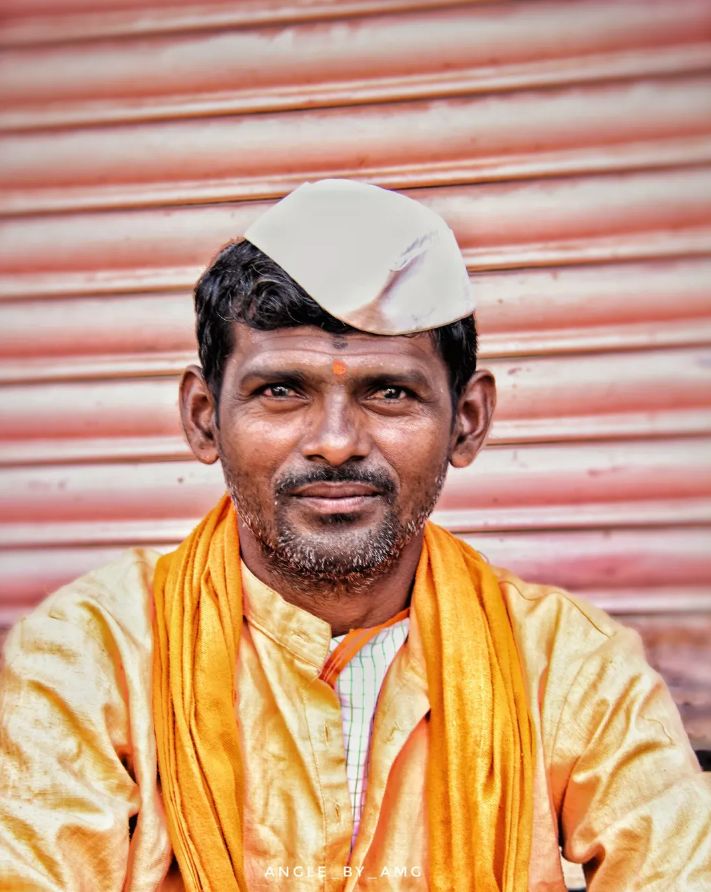
If the picture's entire subject is a specific individual — their face, their expression, who they are — the presumption should be to ask. Nearly every frame in the portrait section of this portfolio, elders, market vendors, a pilgrim mid-journey, involved a conversation first, however brief. Sometimes that conversation was just a raised camera and a questioning look, met with a nod. Sometimes it was five minutes of talking before a single frame was taken. Either way, consent changes what a portrait can be: a subject who has agreed to be photographed will often give you something a stolen frame never could — direct eye contact, an unguarded second, permission to get close.
Don't ask when the photograph is about the scene
Most of the frames in the street section are different: a figure crossing a mural, a photographer at work in a crowd, two boys in a doorway in Bandra. In these, the person is part of a larger composition rather than its entire subject — the picture is about a place, a rhythm, a piece of urban choreography that a person happens to complete. Stopping to ask permission in these cases usually breaks exactly the thing being photographed: the unposed, unaware quality that makes the frame true to the moment. Here, the ethical obligation shifts from asking to being visible and honest about being a photographer — carrying a camera openly, not hiding, not photographing anyone in a vulnerable or compromising situation, and being willing to delete a frame on request.
The test isn't "did I ask," it's "would this person feel misrepresented if they saw the finished photograph."
The harder middle cases
Documentary work sits uncomfortably between these two rules. A ritual, a funeral procession, a moment of grief or labour, often can't be interrupted with a question without changing or disrespecting what's happening, but the resulting photograph is frequently as intimate as a portrait. In these cases the working rule has become: photograph with restraint during the moment, and seek out the people afterward — to show them the frame, explain its intended use, and give them the chance to object before it's published or printed. It's slower, and it means a handful of strong frames each year never get used because someone, reasonably, said no. That trade has been worth making.
None of this is a formal code of ethics — just a set of working habits, revised after enough uncomfortable moments in the field to know which mistakes are worth not repeating.