Henri Cartier-Bresson gave documentary photography its most famous phrase — the decisive moment — and it has done the field a quiet disservice ever since. It suggests that the work is mostly about timing: be in the right place, watch closely, press the shutter at the exact instant the composition and the meaning line up. In practice, most of the useful time on a documentary shoot is spent after that instant, not before it.
Something happens — a ritual begins, a market opens, a boy runs past a doorway — and it is, almost by definition, already too late to have photographed the most interesting version of it. The genuinely decisive moment is rarely one you see coming. What you can do is stay in the scene long enough for the second, third, or eleventh version of it to arrive, and be ready for that one instead.
Waiting is not passive
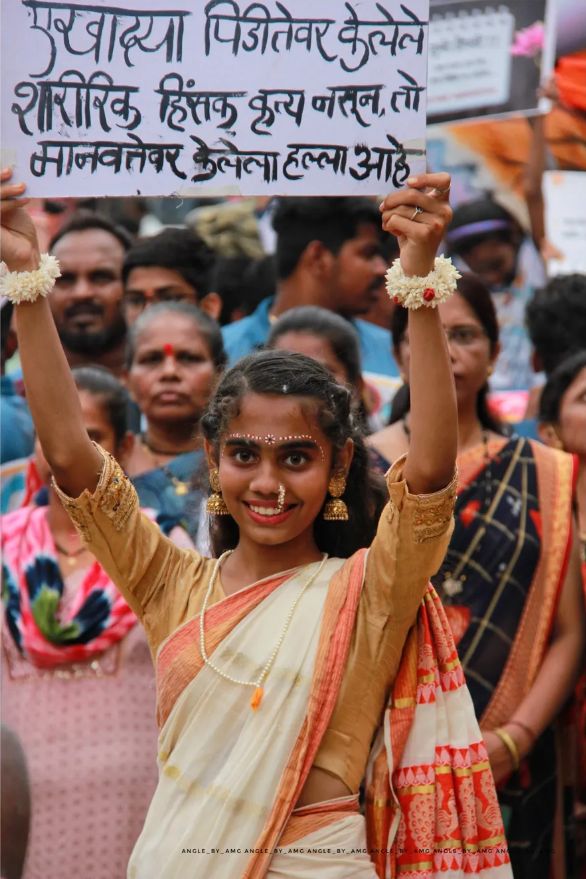
The photographs in the documentary section of the portfolio — market faces, a ritual wound, workers above a construction site — were almost all made after ten or twenty minutes of standing in one place doing very little that looked like photography. Waiting, done properly, is active: you're reading the rhythm of a space, working out where the light will be in five minutes, deciding which of three possible vantage points will let a second event complete a first one you've already half-seen.
That's different from loitering with a camera, which people notice and resent. The difference is usually visible in the body: a photographer who is waiting with intent tends to be still, facing the scene, camera low. A photographer who is just hanging around tends to be scanning, camera raised and lowered repeatedly. Subjects read that difference correctly, almost every time.
The picture you were waiting for is very rarely the one you thought you were waiting for.
What changes with practice
Early on, the temptation is to fire the shutter the moment something interesting starts, out of fear that it will be over before you're ready. That instinct produces technically fine, dramatically flat photographs — the beginning of an event, rather than its shape. With more time in the field, the discipline shifts toward holding off: composing for where the scene is going, not where it currently is, and trusting that the wait will pay for itself.
It doesn't always. Plenty of waits end with nothing, or with a frame that's technically correct and says nothing at all — which is also, in its way, useful information about a place. But the photographs worth keeping, the ones that end up sequenced into a body of work rather than deleted the same evening, are almost never the first frame taken. They're the fourth, or the ninth, or the one taken quietly after everyone assumed the photographer had already got their shot and stopped paying attention.
None of this is a technique so much as a temperament — one that has to be relearned on every new assignment, because every scene resets the clock on how long is too long to wait.